

Conserving Threatened Freshwater Fish in Lake Manguao, Palawan
SHOAL–ASAP Freshwater Fish Conservation Grant 2024
Combining biodiversity research, community knowledge and conservation education to protect one of the Philippines' most distinctive freshwater ecosystems.
Lake Manguao, also known locally as Lake Danao, is one of the most important freshwater ecosystems in Palawan. Surrounded by a largely forested catchment, the lake supports unique freshwater biodiversity, including fish found nowhere else in the world.
The lake and its surrounding habitats face increasing pressure from unsustainable fishing practices, agricultural activities, forest degradation, pollution and emerging tourism development. Limited information about threatened freshwater species and their habitats has also constrained effective conservation planning.
With support from the SHOAL–ASAP Freshwater Fish Conservation Grant, C3 Philippines undertook a programme of ecological research, community consultation and conservation awareness activities to strengthen the knowledge base for protecting Lake Manguao’s endemic freshwater fish and their habitats.
The project combined fish surveys and monitoring of fishing activities with household interviews and environmental education, providing information to support future management decisions and community participation in conservation.
Activities
Freshwater Fish Surveys and Monitoring
C3 conducted field surveys to investigate the occurrence and distribution of freshwater fish within Lake Manguao.
Sampling covered different lake habitats, including open-water areas, shallow marginal habitats and streams, using methods such as gill nets, cast nets, scoops and seines.
The research focused on freshwater fishes of particular conservation concern, including the Lake Manguao barb (Barbodes manguaoensis) and the endemic sleeper goby Bostrychus expatria.
The surveys also documented the presence of introduced Nile tilapia (Oreochromis niloticus), an important component of the local fishery.
Assessing Fishing Practices and Resource Use
Between July and September 2024, C3 conducted fish-landing surveys in Barangays Poblacion and Bantolan.
The surveys documented fishing locations, catches, fishing methods and the occurrence of native freshwater species in local catches.
The findings showed that Nile tilapia dominated recorded landings, while endemic freshwater fishes were caught in smaller numbers and were generally not preferred for commercial sale.
The study also highlighted the importance of traditional paddle boats, hook-and-line fishing and gill nets to local fishing activities.
Information from these surveys provided a baseline for understanding fishing pressure and identifying opportunities to improve resource management.
Understanding Community Perspectives
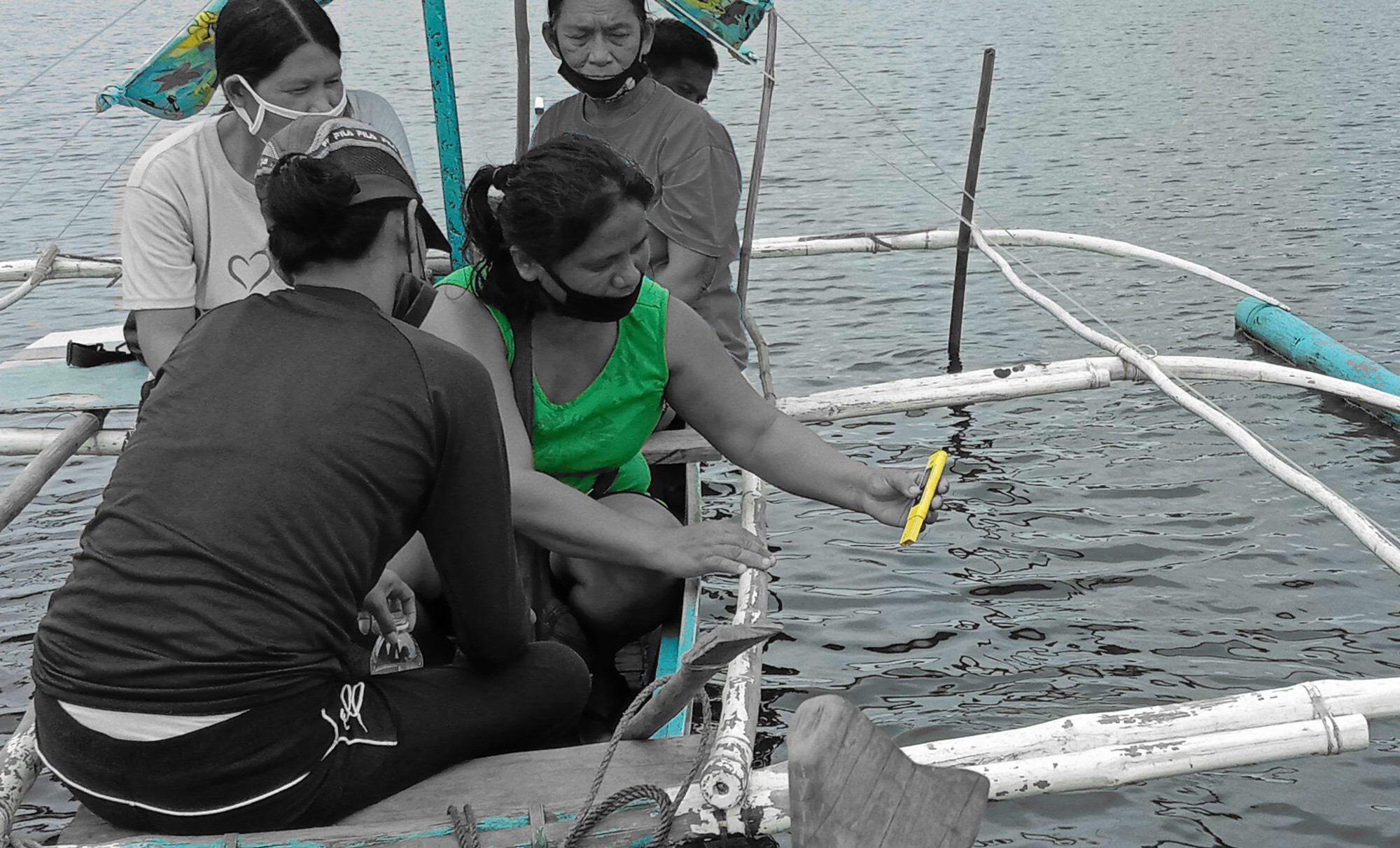
C3 interviewed 30 households around Lake Manguao to investigate livelihoods, resource use, perceptions of environmental change and awareness of threatened freshwater biodiversity.
The consultations found that approximately 80% of surveyed households depended on farming, fishing or a combination of both.
Community members identified a range of perceived threats to the lake, including inappropriate fishing nets, electric fishing, illegal logging, slash-and-burn agriculture, pesticide use and waste disposal.
The interviews also revealed broad support for conservation and sustainable resource management, alongside gaps in awareness of the lake’s distinctive freshwater species.
Conservation Education and Awareness
To help communicate the importance of Lake Manguao’s freshwater biodiversity, C3 developed illustrated educational postcards highlighting the lake and its endemic fishes.
The materials were intended to support community awareness and provide a foundation for further environmental education, particularly among younger people.
The project identified schools, local community groups and government institutions as important partners for future conservation education activities.
Informing Conservation Management
Drawing on field research and community consultations, C3 developed recommendations to strengthen the management of Lake Manguao and its surrounding catchment.
These included improving biodiversity monitoring, addressing damaging fishing and land-use practices, expanding public awareness and supporting science-based conservation policies.
The project also helped strengthen relationships with local communities and government stakeholders, providing a foundation for further collaboration on freshwater conservation.
Key Results
- 30 households interviewed to assess livelihoods, environmental awareness and perceived threats.
- Fish-landing surveys conducted during 2024, documenting native and introduced freshwater fish in local catches.
- Field sampling undertaken across different lake habitats to investigate freshwater fish occurrence and distribution.
- Six fish-landing locations documented around the lake.
- Important threats identified, including inappropriate fishing practices, forest degradation and potential impacts on water quality.
- Educational postcards developed to support awareness of Lake Manguao’s endemic freshwater biodiversity.
- Recommendations prepared to support future monitoring, environmental education and local conservation planning.
Lasting Impact
The project helped address important gaps in knowledge about Lake Manguao’s threatened freshwater biodiversity and the human activities affecting its habitats.
By combining biological surveys with community perspectives, C3 developed a more integrated understanding of the conservation challenges facing the lake.
The work also highlighted the importance of engaging local residents, Indigenous communities, government agencies and educational institutions in protecting freshwater ecosystems.
The resulting survey information and recommendations provide a foundation for continued monitoring, community awareness and the development of stronger conservation-management measures.
Beyond Lake Manguao, the project demonstrates C3 Philippines’ capacity to apply community-based conservation approaches to freshwater habitats and highly localised threatened species, complementing its wider work in marine biodiversity and coastal resource management.
Contact C3 Philippines
Busuanga OfficeSalvacion, Busuanga, Palawan, 5317 Philippines
Taytay Field OfficePurok 6 San Lorenzo, PoblacionTaytay, Palawan, 5312 Philippines
C3 Philippines (C3PHILIPPINES INC.), in accordance with the Corporation Code of the Philippines, is registered as a non-profit organization in the Philippines under the Securities and Exchange Commission with Company Registration No. CN201115227.